Author : Shenzhen Tuoxian Technology Co., Ltd, Release time : 2025/1/14 18:36:47
ROS (Robot Operating System) is not an operating system in the traditional sense, but an open-source software framework for building robotic applications. It reduces the complexity of robot development through standardized tools, libraries, and communication mechanisms.
The core of ROS is to solve the "coordination problem" in robot development, allowing different functional modules (such as sensors, motors, and algorithms) to cooperate efficiently. Its main value is reflected in three aspects:
Modular design: Robot functions are divided into independent "nodes" (such as LIDAR nodes, path planning nodes), each of which can be developed, tested, and replaced independently, reducing coupling. Cross-platform and cross-language: Supports Linux (mainstream), Windows, and other systems, compatible with C, Python, Java, and other programming languages, allowing developers to choose tools flexibly.
Rich ecosystem resources: The official community and third-party sources provide numerous ready-made packages (such as navigation, SLAM, robotic arm control), covering the full process from hardware drivers to high-level algorithms, eliminating the need to develop from scratch.
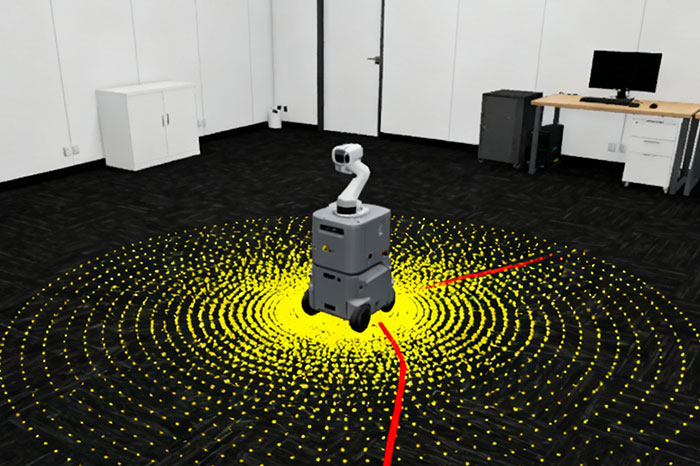
Understanding ROS requires grasping several fundamental concepts which are the core of the framework:
Node: The smallest functional unit of a robot. A node is responsible for a specific task (such as reading camera data or controlling wheel movement). Multiple nodes can run distributively on different devices (such as on the robot itself and a remote computer).
Topic: A "one-way communication channel" between nodes used to transmit continuous data (such as sensor data or velocity commands). For example, a camera node publishes images via the /image_raw topic, and a display node subscribes to that topic to receive the images.
Service: A "two-way request-response communication" between nodes, used for single, non-continuous tasks (such as querying the robot's current position or controlling a robotic arm to grasp). A request must be explicitly sent, and a response awaited. Message: The data format transmitted by topics and services. ROS defines common message types (such as sensor_msgs/LaserScan for laser data, geometry_msgs/Twist for velocity commands) and also supports custom formats.
Package: The basic organizational unit of ROS, containing node code, configuration files, dependency descriptions, etc. Each package corresponds to a complete function (such as a "Laser SLAM package" or a "Differential Drive Robot Control package").